6 min read
Another Layer of Meaning of Brutalist Nature
Brutalist Architecture is concrete, heavy, public. Brutalist Nature is the opposite — it is not built with concrete, it is built with time.

Brutalist Architecture is the name of an architectural style.
It emerged in the mid-twentieth century, characterized by raw concrete, heavy mass, exposed structure. Its buildings look unrefined — beams and columns are not hidden in ceilings, pipes are not buried in walls, everything is placed on the surface, connected in the most “clumsy” way.
Brutalist’s root is “brut,” French, meaning “raw” — unprocessed. Brutal in English became “cruel” — this created misunderstanding. Brutalist Architecture is not cruel; it is honest: exposing structure, letting people see how buildings are made.
This logic applied to nature becomes Brutalist Nature.
Nature is more honest than any architect. A tree does not hide its annual rings; it places them on the cross-section for all to see. A rock does not hide its cracks; cracks are the temperature changes, water seepage, and tectonic movement it has endured. A mountain does not hide its age; it places age on its altitude, slope, vegetation layer distribution.
Brutalist Nature is nature’s this characteristic: it does not hide its history. Its history is its surface.
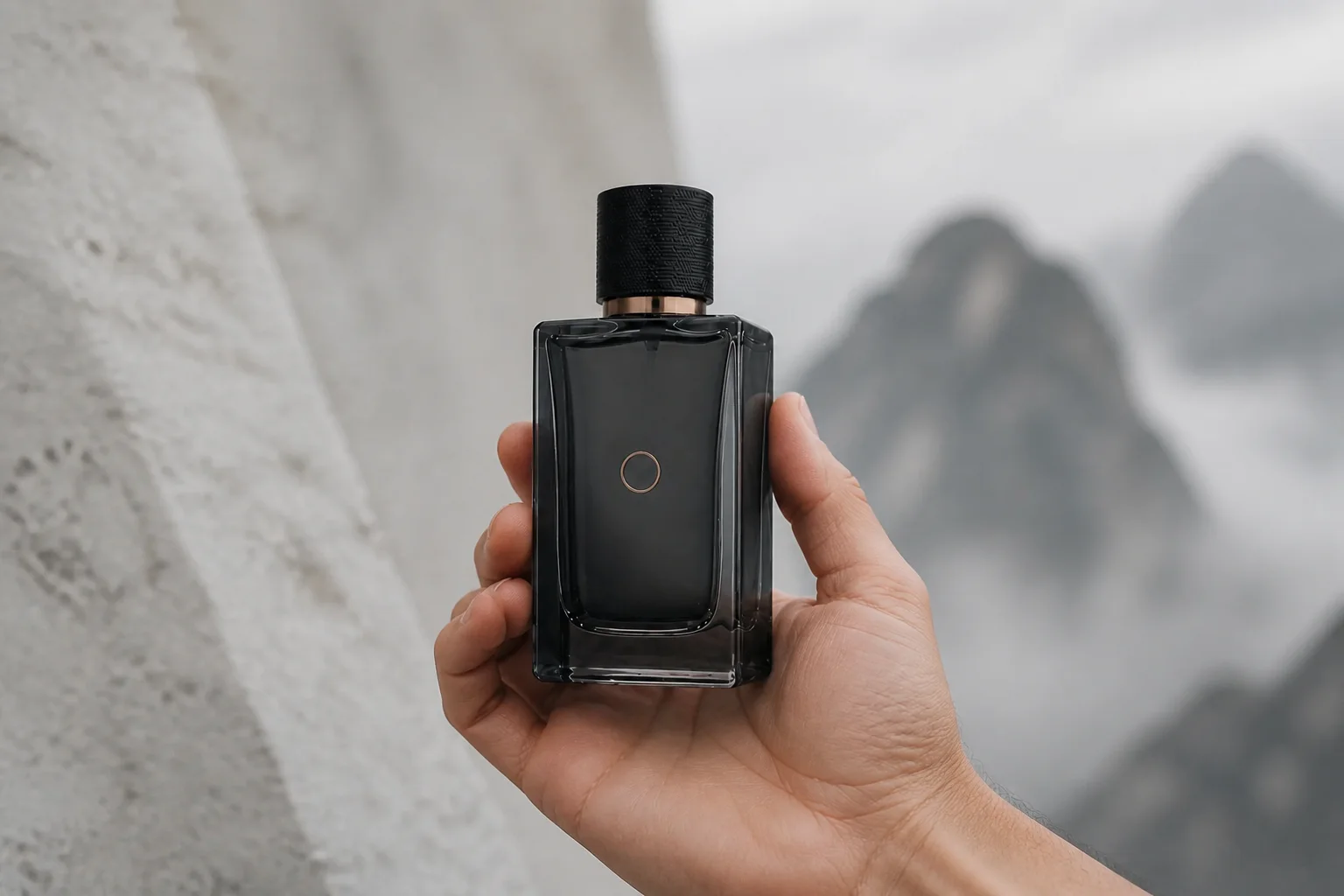
Why does OPALITESCENT’s bottle not pursue symmetry?
Symmetry is a rhetorical device. Symmetry means this object can be replicated, predicted, infinitely approaching some ideal. Symmetry is industrial logic, can be mass-produced.
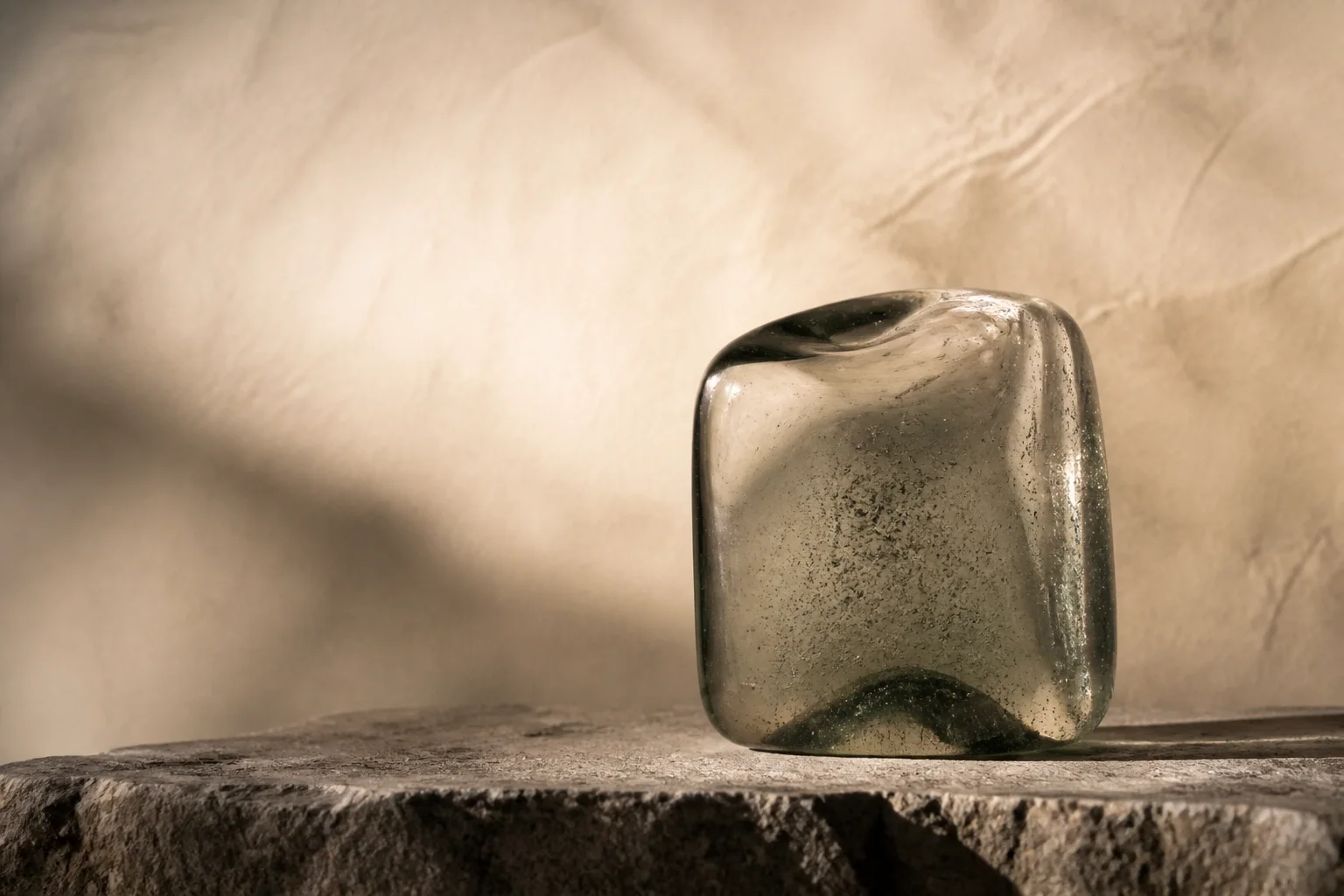
Natural bottles — amber, gum, fossils — are none symmetrical. Because each is the product of an irreproducible historical process. Amber is tens of millions of years of resin; the insect species, size, and posture it trapped are all unique. That insect was struck by that resin drop at just the right moment at that moment, then preserved, then became amber. That moment’s time, position, density, temperature, are all unreproducible.
Brutalist Nature’s second meaning: only unreproducible things are worth preserving.
Our bottles pursue not symmetry, but that “moment.” A moment in a place, a moment in temperature, a moment in aromatic molecule combination. That moment passed, is passed. There is no way to return to that moment and start over.
So our bottles in design are not perfect. We deliberately preserve the bottle’s manual feel — each batch’s bottles have slight weight differences, wall thickness has tiny variations. These differences are not flaws; these differences are the distinction between “this batch” and “that batch,” the fingerprint of time.
Concrete in Brutalist Architecture is not a cheap material; it is the most honest material: its color is the material’s own color, its quality is the material’s own quality, it does not pretend to be something else.
Natural aromatics in OPALITESCENT are also not cheap substitutes; they are the most honest materials: their imperfection is the material’s own imperfection, it does not pretend to be perfect.