7 min read
On the Road - Trail Run: Mountain Path Fallen Leaves Are a Calendar
Trail runners do not need to reach the mountain top to smell the mountain. The first scent trail runners smell on mountain paths is fallen leaves. Leaves of different years smell different. Last year's oak leaves and this year's oak leaves do not smell exactly the same.
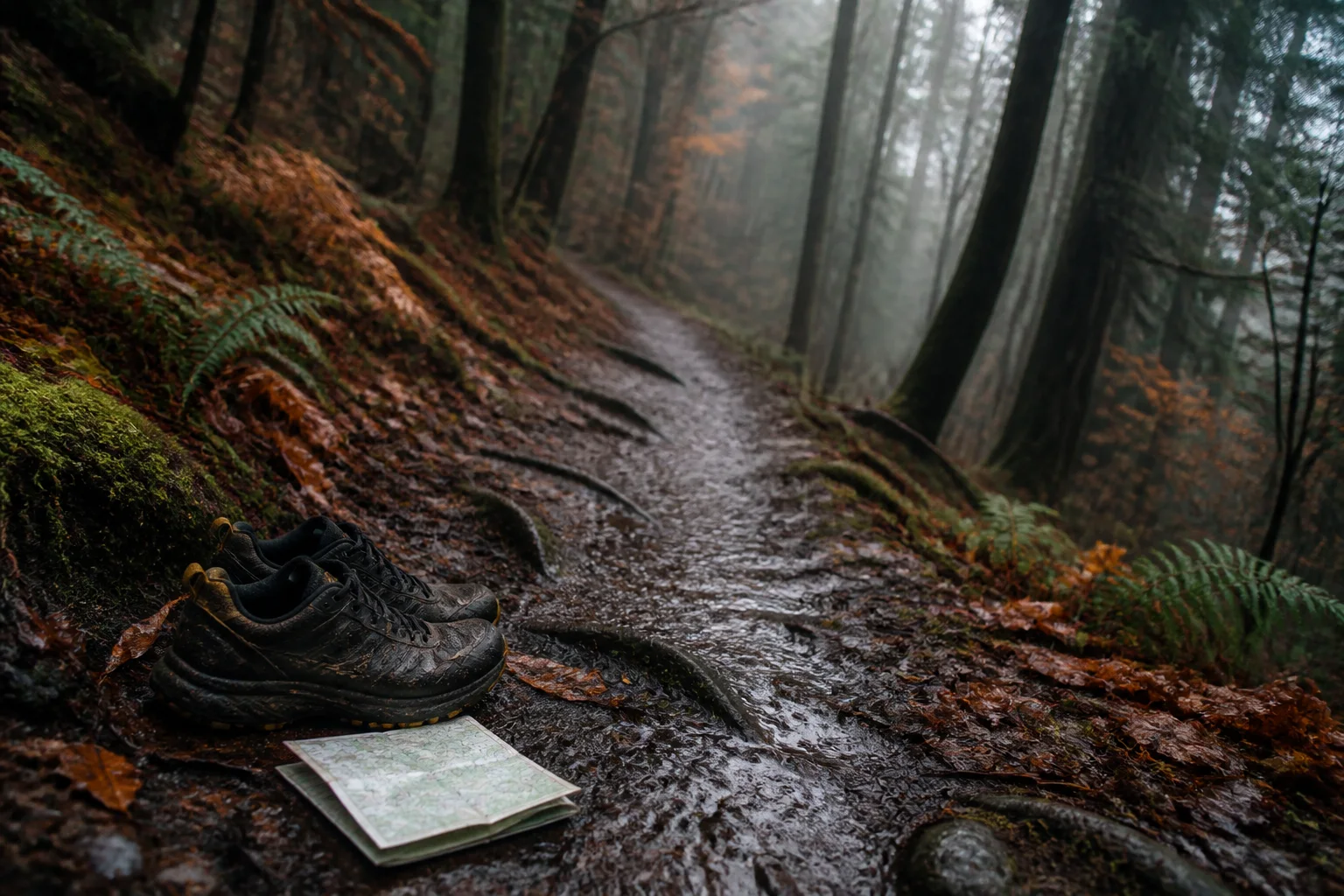
Trail runners do not need to reach the mountain top to smell the mountain.
The first scent they smell on mountain paths is fallen leaves. Fallen leaves’ scent is the fingerprint of seasons.
Mountain path fallen leaves are not from the same tree. Oak, maple, linden, chestnut — each leaf produces different scent molecules during decomposition. Oak leaf decomposition produces tannic acid compounds — that is astringent, the scent of “tannin”; maple leaf decomposition produces phenolic compounds — that is sweet, fermented sweetness, not fresh fruit sweetness, but “becoming something else” sweetness.
Last year’s fallen leaves and this year’s fallen leaves smell different.
Last year’s fallen leaves have been mostly decomposed by microorganisms, leaving humus — humus is the most stable part of soil organic matter, the result of year-after-year leaf accumulation. Humus smells like “sweet with history,” not sweetness itself, but the skeleton remaining after sweetness has passed through time. Fresh fallen leaves smell greener, have the raw taste of plant chlorophyll. Trail runners can distinguish these two types — not needing to be botanists, just having run the same mountain path enough times.
The body remembers the mountain path’s olfactory map.
UTMB (Ultra-Trail du Mont-Blanc) participants have a saying: running to a particular pass, you know how many kilometers remain. Not by looking at a watch, but by smelling. The pass’s wind comes from a certain direction, carrying the scent of scree and snow; the forest on the descending section has streams, moss, water-soaked wood. The body links these olfactory signals with mileage, like a built-in GPS.
This GPS is not innate; it is trained. Training is repetition: running the same path many times, smelling the same things each time, then the body links smell with location. This is the interaction between the hippocampus’s spatial memory function and the olfactory system — these two systems are homologous in evolution, sharing some neuroanatomical pathways.
This explains why some mountain runners say “I can smell this mountain and know whether I want to continue running.”
Some mountains’ fallen leaves smell “friendly”: sufficient moisture, rich humus, indicating healthy soil and complete ecosystem. Some mountains’ fallen leaves smell “tense”: dry, dusty, without humus sweetness, indicating this forest’s ecosystem may have problems — could be water shortage, soil acidification, understory cleared.
Trail runners do ecological detection through their nose. They do not need detection equipment; their body is the detection equipment.
Salomon’s Sense series trail running shoe design logic is related to this olfactory experience. Sense series sole design is not for grip, but for “feeling.” The information when sole contacts ground — hard, soft, wet, slippery — is transmitted through the foot to the runner’s brain. This information and olfactory information together constitute the complete perception of mountain trails.
Trail runners are people who run with their nose. Mountains are not seen with eyes; mountains are smelled with nose.
After running, the body carries the scent of mountain trails. Sweat brings trail scent molecules to clothes, skin. This smell remains in fibers after washing, for days.
That is the scent of being on the road.
Associated Notes: [Woody] [Aquatic]