5 min read
Orion's Belt Does Not Extinguish
Orion's three stars are on the equator. Alnitak, Alnilam, Mintaka. The nearest one is over a thousand light years away. Light takes a thousand years to arrive. So every moment you see is not the present.

Orion’s belt is three stars.
Alnitak, Alnilam, Mintaka. They form a line on the equator, the most recognizable star pattern in the entire sky. Both the Southern and Northern Hemispheres can see it, because the equator passes through it. Every winter, it appears most prominently in the night sky, hanging due south.
These three stars are not ordinary stars. They are young blue supergiants; each one’s brightness exceeds the Sun’s by more than ten thousand times. Alnilam’s spectral type is B0Ia — in this classification, “Ia” means: this star has not yet begun to redden, it is still in the hydrogen-burning phase, it is at its brightest.
At its brightest. This is Orion’s core image. Not eternity, but the brightest moment.
The perfumer started from these three words: “brightest moment.”
He said: “Orion should not smell warm. Warmth is the characteristic of elderly stars. Orion should smell cold, sharp, the taste of metal at low temperatures — cold itself has a scent, not temperature itself, but the process of metal losing temperature.”
Orion, the fragrance. Top note is black pepper. Not ordinary black pepper, but white pepper from India’s Malabar coast, extremely small particles, with capsaicin content three times that of ordinary black pepper. That sharpness is this fragrance’s facade — not hot sharpness, but cold sharpness. The sharpness carried by that star that has burned for a thousand years at its brightest but has not yet dimmed.
Heart note is cedar. Not Atlantic cedar, but Himalayan cedar, growing above 3,000 meters elevation, with tighter wood grain and higher resin content. Cedar in Orion’s context is not forest, but stardust — the substance that composes stars. Cedar’s wood scent is the sensation of stardust falling on skin.
Base note is extremely low concentration ozone. Ozone is what oxygen becomes when exposed to ultraviolet radiation. Ozone’s scent is “cold,” but not the cold of northern wind — it is the cold of high altitude — the space beyond the ozone layer, cold enough that no molecule can vibrate.
Light takes 1,200 years to reach the eye. That moment, you are looking into the past.
Associated Notes: [Spicy] [Woody] [Ozone]
Land & city
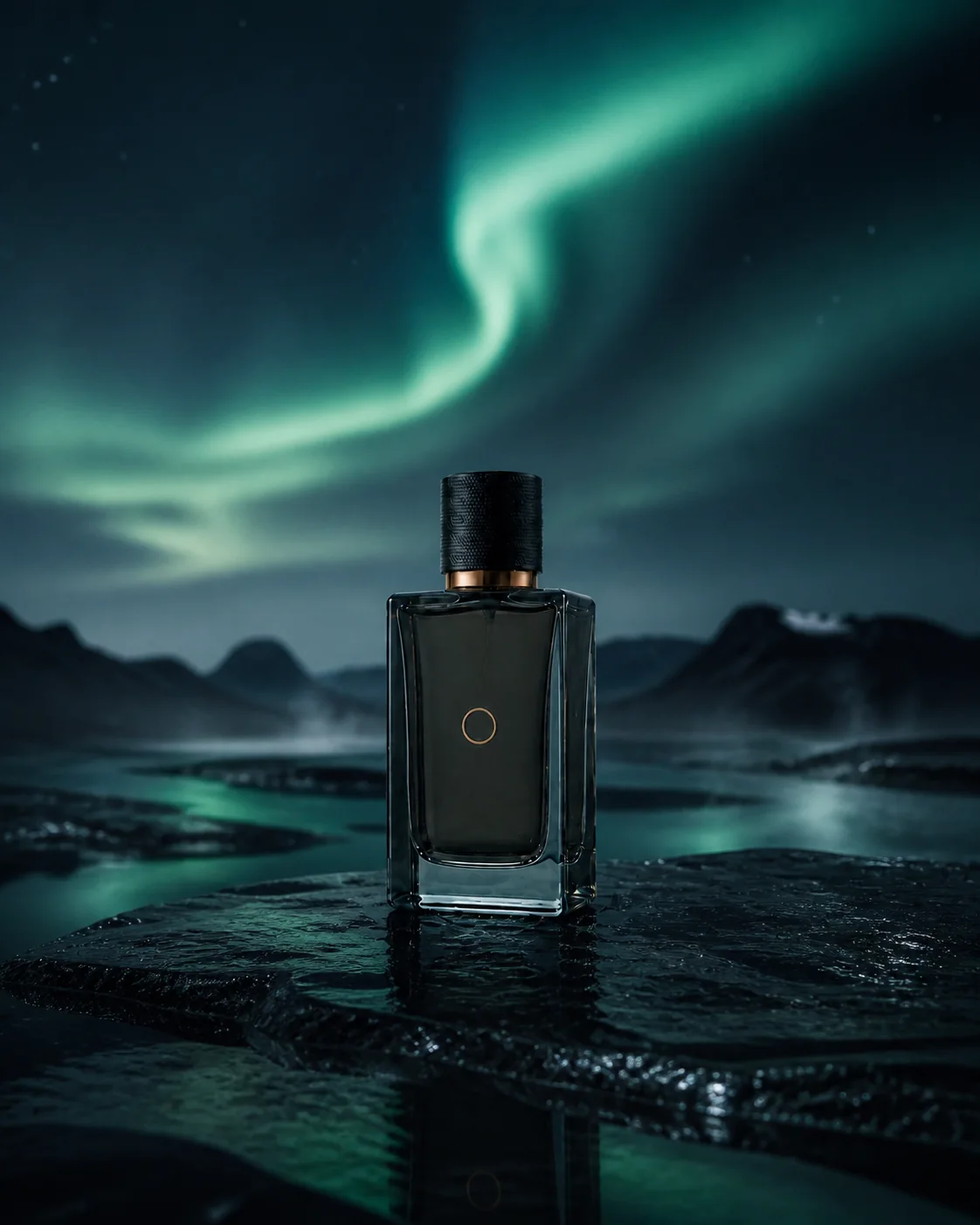
The Curved Path of Aurora
Land & city
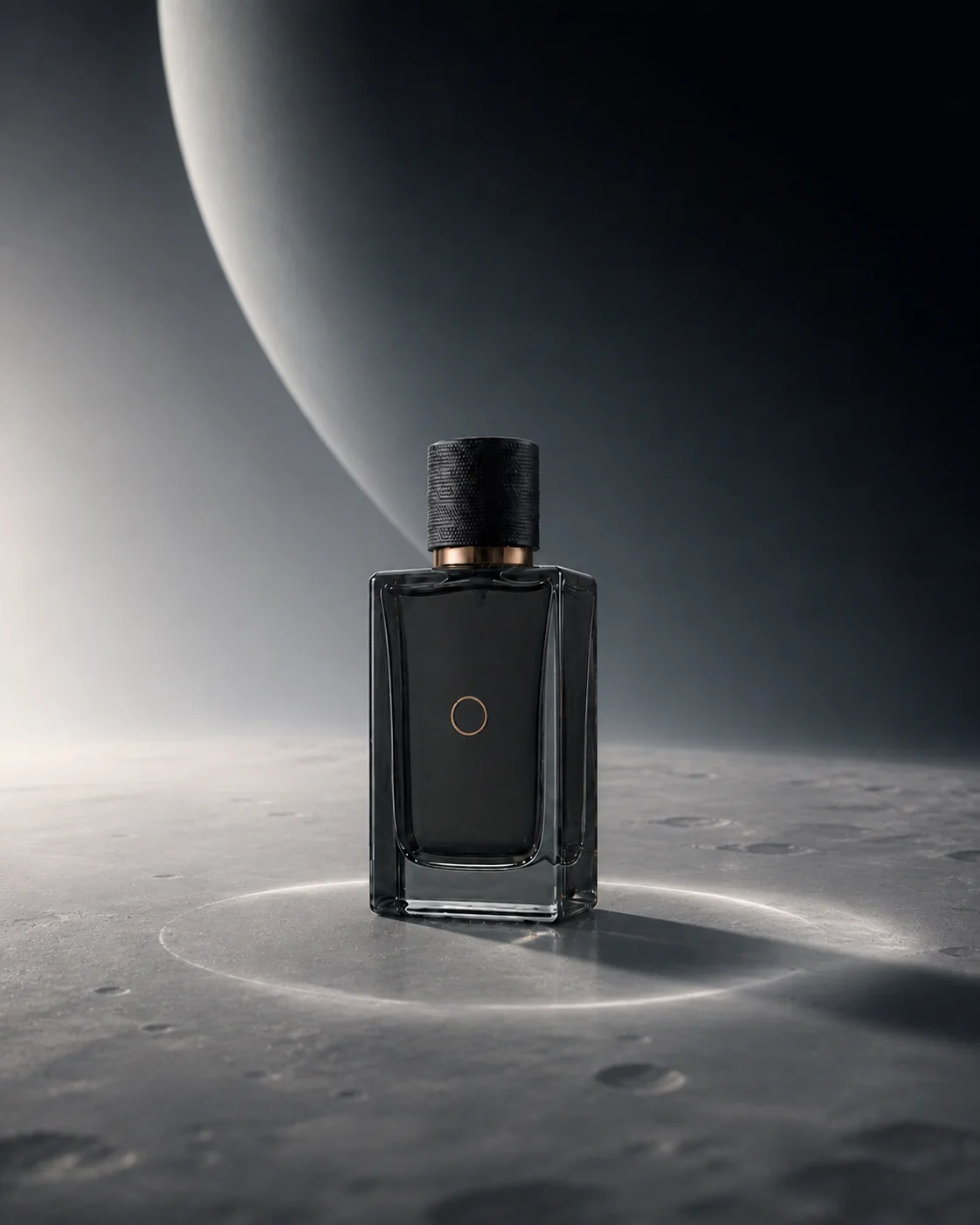
Orbit's Critical Point Does Not Deviate
Land & city