5 min read
Nebula's Rose Has No Scent
Nebulae are the remains of stars. The Orion Nebula is a star nursery. The Rosette Nebula is a star graveyard. Each layer of color in a nebula is a star that has died.
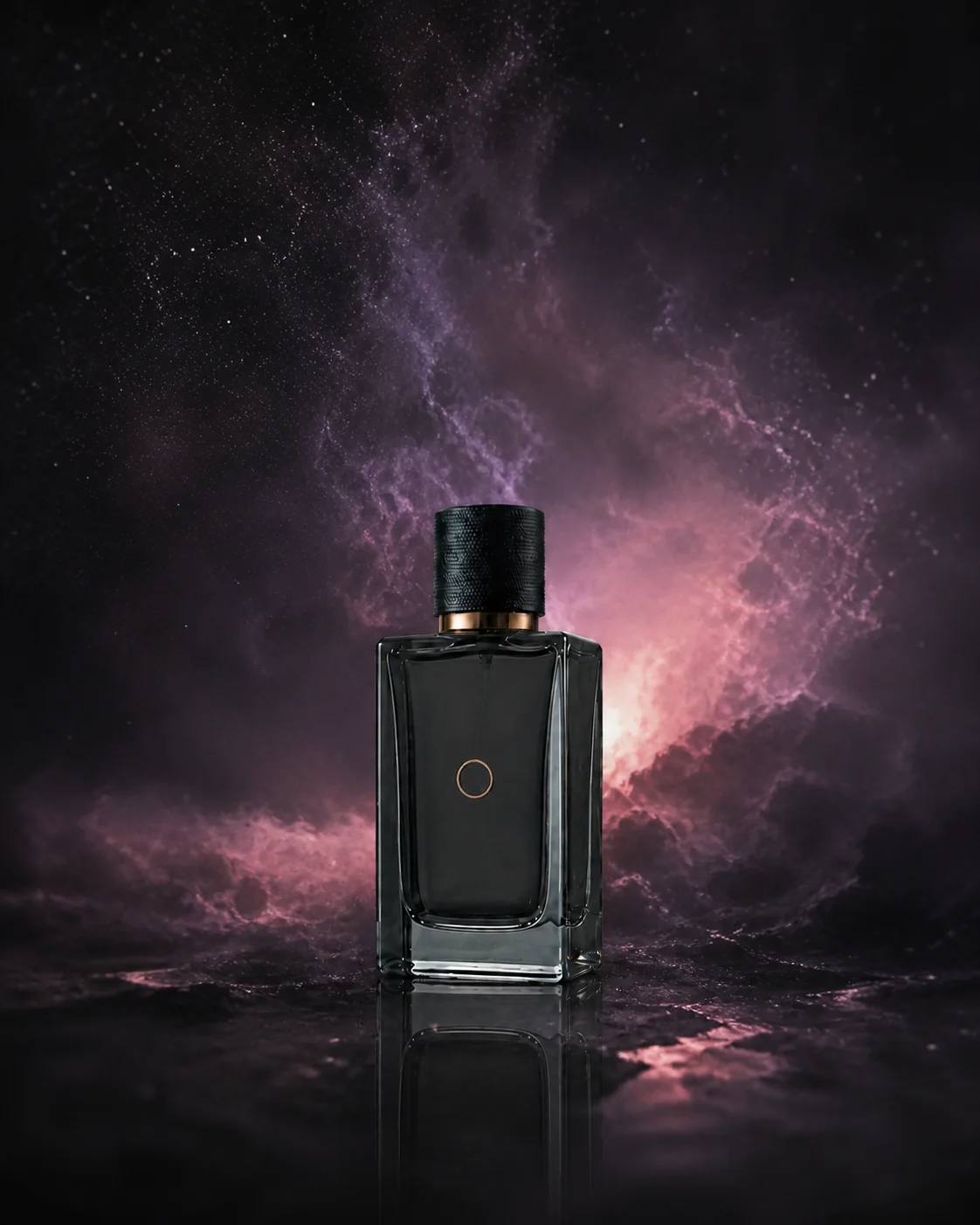
Nebulae are the remains of stars.
The Orion Nebula is a star nursery — new stars are forming there, with extremely high temperatures, extremely high density, gas and dust contracting under gravity, eventually igniting. The Rosette Nebula is a star graveyard — composed of hot hydrogen gas, illuminated by nearby stars, showing red, which is light emitted by excited hydrogen atoms.
Red is hydrogen’s color. Hydrogen emits red light in excited state. Hydrogen gas is the oldest substance in the universe — produced three minutes after the Big Bang. Three minutes after the Big Bang, there was only hydrogen in the universe. The Rosette Nebula’s red is the echo of the Big Bang.
The perfumer, the night he observed the Rosette Nebula at the observatory, the telescope pointed at NGC 2237, the Rosette Nebula’s catalog number. He watched through the eyepiece for forty minutes.
He said: “Nebulae should not smell like roses. Roses are Earth’s business. Nebulae should smell like the state three minutes after the Big Bang — the simplest molecular structure, the lightest elements, the earliest light.”
Nebula, the fragrance. Top note is dark rose. Not Damask rose, but Moroccan centifolia rose, picked at four in the morning. That rose at that time has the highest oil content, the most complete aromatic molecules. But this top note lasts only thirty seconds, then retreats to an extremely dark base.
Heart note is violet leaf. Violet leaf’s scent is “green,” is “metallic,” is trans-2-hexenal produced by chlorophyll degradation. This molecule finds its counterpart in nebulae — nebular dust, when irradiated by nearby stars, also produces similar organic molecules. These molecules are the seeds of life — they drift through the universe, waiting for suitable environments, waiting for the next ignition.
So nebulae are not graveyards. Nebulae are also nurseries.
Base note is ozone. Ozone evokes ultraviolet light, star burning, the temperature three minutes after the Big Bang — that temperature exists, in cosmic microwave background radiation, its current temperature is 2.7 Kelvin. It is the universe’s residual warmth.
Residual warmth is not no temperature. Residual warmth is what the Big Bang left behind.
Associated Notes: [Floral] [Ozone]
Land & city
The Curved Path of Aurora
Land & city
Orbit's Critical Point Does Not Deviate
Land & city