4 min read
Huangshan's Fog Does Not Wait
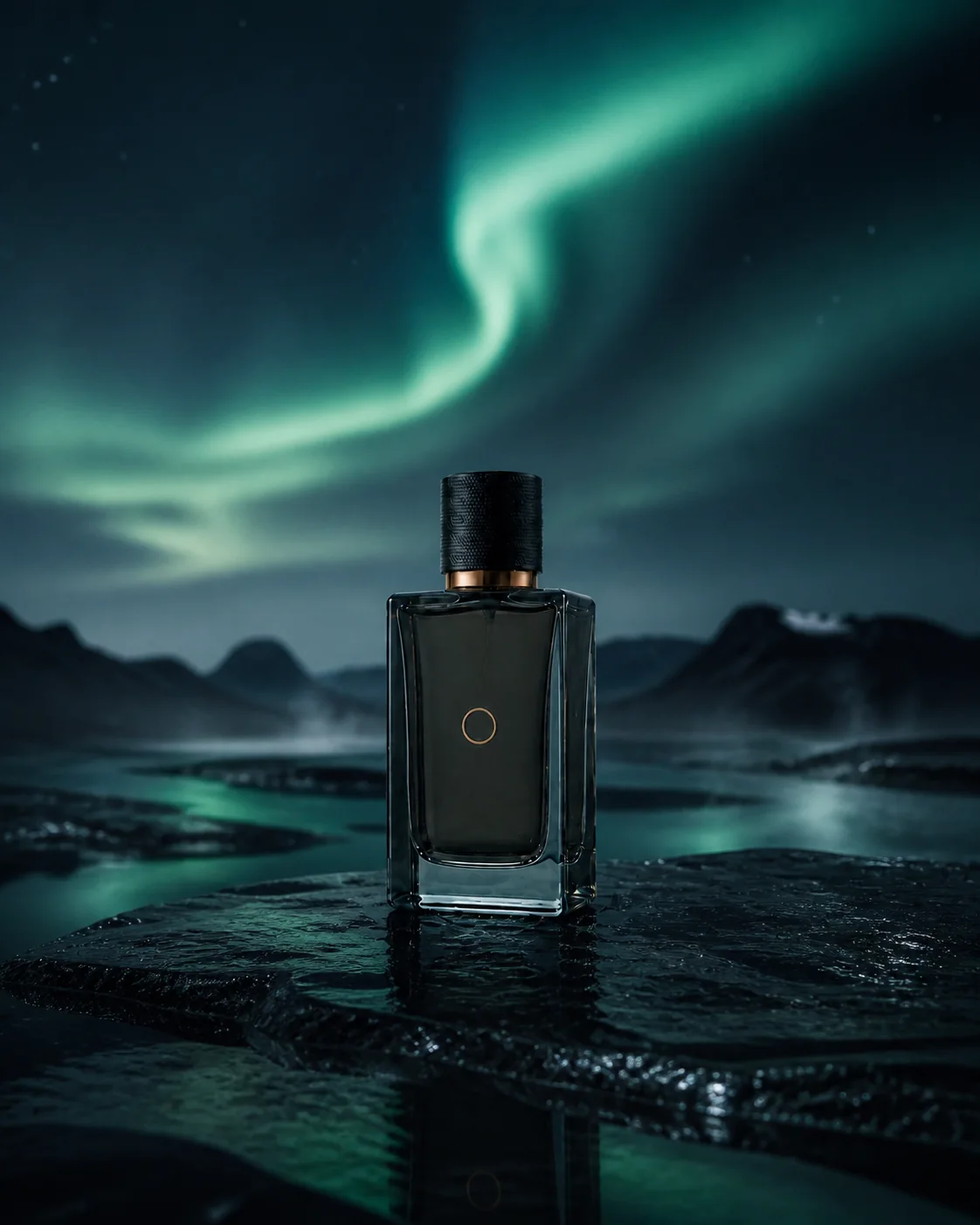
Five in the morning. Guangding Peak has no light yet. Fog rises from the valley bottom, layer upon layer; the lowest layer has already condensed into extremely fine water droplets, clinging to pine needles. Huangshan's scent begins here.

Five in the morning. Guangding Peak has no light yet.
Fog rises from the valley bottom, layer upon layer; the lowest layer has already condensed into extremely fine water droplets, clinging to pine needles. The pine needles do not move, the water droplets do not move. The entire valley at this elevation has become still, like an unopened fragrance bottle.
Huangshan’s scent begins here — not a particular floral or woody scent, but a dampness. The breath exhaled by moss on stone walls at night, the concentration of pine resin slowly seeping at low temperatures, the mineral particles carried by fog itself.
The perfumer’s first mountain visit, he brought no tools. He said, smell first.
He stood in front of one rock for forty minutes. That rock faced north, never received direct sunlight, covered with an extremely thin layer of moss. Later he described that moss’s scent: “Not green. Green is a color word, but it is not a color word. It is — the state before it becomes color.”
This is the starting point of Huangshan, the fragrance.
Not perfuming, but waiting. He waited three days before catching that humidity, before fog from the valley rose and achieved a certain ratio with the molecules released by the moss. He said that ratio cannot be replicated; seventeen attempts in the lab with artificial molecules, each time fell short.
What fell short was time.
Huangshan’s fog does not wait. It only forms that specific air structure during November through March of the following year, between four and six in the morning, when valley humidity exceeds ninety percent. This window, in the past ten years, only forty-five days fully coincided.
So Huangshan, the fragrance, is never “imitating a mountain.” It preserves the result of a waiting, an encounter between person and fog.
Preservation itself is craft.